Hidden Risks and Costs of Naming Minors as Direct Beneficiaries of an IRA or Qualified Retirement Plan

A valuable feature of an Individual Retirement Account (IRA) or a Qualified Retirement Plan (401k, 403b, etc.)(QRP) is the ability to invest without incurring contemporaneous taxes on the investments held in the account. This benefit is available to both the original owner of the account and to designated beneficiaries who inherit the account after the owner’s death. For this reason and others, it is very important to name appropriate beneficiaries for an IRA or a QRP account.

Read More about Hidden Risks and Costs of Naming Minors as Direct Beneficiaries of an IRA or Qualified Retirement Plan

Major Changes are Impacting IRAs and QRPs – How is your Estate Plan Affected?

Recently, the Setting Every Community Up for Retirement Enhancement Act (SECURE Act) was enacted into law. The SECURE Act makes significant changes to the administration of Individual Retirement Account (“IRA”) and Qualified Retirement Plan (401k, 403b, etc.)(“QRP”), and was effective on January 1, 2020. For many people, an IRA or QRP is one of their most valuable assets. Because these assets result from hard work to create and maintain the account, owners should be aware of the changes found in the SECURE Act and how they may affect the owner’s estate plan.

Read More about Major Changes are Impacting IRAs and QRPs – How is your Estate Plan Affected?

Becoming a Guardian in Pennsylvania

What do you do if you believe a family member or a friend has become unable to care for themselves or their finances? This is a very stressful and troubling question that, unfortunately, many people end up asking themselves.

In some instances, the individual has an estate plan in place. This might include a power of attorney, or other directive, that indicates who will make important decisions for the individual in the event that they are unable to do so. Sometimes, there is no estate plan, but the individual does not have the capacity to execute estate planning documents, including a power of attorney. All is not lost.

Read More about Becoming a Guardian in Pennsylvania

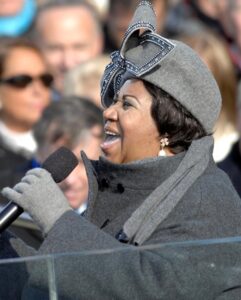
Aretha Franklin is Reported to Not Have Left Behind a Will

Last week, Aretha Franklin passed away at 76 due to advanced pancreatic cancer. This week, reports have been coming in claiming that the Queen of Soul had died without a Will or Trust. According to her long-standing attorney, Don Wilson, he had requested that she establish a trust numerous times, but she never got around to creating one.

Unfortunately, Aretha Franklin is far from the first notable individual to pass without establishing a Will or Trust, many of whom often happen to be significant celebrities and musicians. Perhaps immense fame comes with a sense of immortality. But, the sad truth is that two-thirds of estates are administered without a Will or a Trust.

The process of signing a document that identifies your beneficiaries, your executor, and the guardian for your minor children—if you have them—is not particularly difficult or overly time consuming. If anything, taking the time now will save you and your loved ones a lot of stress in the long run. Failing to properly establish this document means that you are choosing to allow state law to make those decisions for you.

Read More about Aretha Franklin is Reported to Not Have Left Behind a Will

A Look at President Trump’s Tax Reform Proposal

Benjamin Franklin once famously said that, “In this world nothing can be said to be certain except death and taxes.” President Trump’s recent tax reform proposal is the administration’s attempt to alleviate one of these certainties of life.

President Trump’s proposal, which was released on Sept. 27, contained the following changes for individual taxpayers:

Read More about A Look at President Trump’s Tax Reform Proposal

Division of Personal Property in an Estate

Upon the death a loved one, the Last Will and Testament governs how the liquid assets of an Estate are distributed. It is also common that the Last Will and Testament may provide instructions as the distribution of some of the personal property of the Decedent. Even under such circumstances, however, this often leaves a large amount of personal property which has to be divided among the living heirs. There are several different ways in which the remaining items of personal property of the Decedent can be distributed which is discussed below.

Read More about Division of Personal Property in an Estate

New Jersey Estate Tax Repeal

On Friday, September 30, 2016, New Jersey lawmakers held a press conference announcing significant changes affecting the New Jersey Estate Tax. The video and transcript of the conference can be accessed by clicking here.

The New Jersey Estate Tax applies to the estates of New Jersey residents and currently has an exemption of only $675,000. Under the proposal, the New Jersey Estate Tax exemption will be increased to $2.0 million per person on January 1, 2017; and effective January 1, 2018, the New Jersey Estate Tax will be eliminated entirely.

Read More about New Jersey Estate Tax Repeal

Defending a Will Contest

In many of my previous blogs I have discussed the procedure involved in contesting a Last Will and Testament. This blog shall focus on other side of the equation, the defense of a Will contest. Since there are many facets involved in the defense of a Will contest, we shall first focus on what the named Executor or Executrix must do upon being served with a Verified Complaint seeking to contest the validity of a Last Will and Testament. For the purposes of this blog, I will assume that the Executor had already taken the necessary steps to admit to probate the Last Will and Testament of the decedent.

Read More about Defending a Will Contest

Blog Categories